Therapeutic and creative support for organisations, teams and communities
Holding Space develops therapeutic art groups, creative health and wellbeing programmes, reflective sessions and individual art therapy for organisations, teams and communities.
Each offer is developed collaboratively and shaped around the people taking part, the setting and what the organisation hopes to provide. This could include emotional support, space for reflection, support during periods of change, or opportunities for connection and shared creative exploration.
My approach is relational, neuro-affirming and responsive to different communication, sensory and processing needs. No previous experience of art-making is needed.
What can be offered
Organisations can commission:
- one-off therapeutic art sessions;
- short-term or ongoing group programmes;
- blocks of individual art therapy for staff, clients or community members;
- creative health and wellbeing sessions;
- reflective creative spaces for teams.
Sessions may include a creative invitation, individual or shared art-making and time for reflection. The format, pace and level of structure are adapted to suit the participants and the purpose of the work.
Who the work can support
Programmes can be developed for a wide range of people, including:
- staff teams and employees;
- parents, carers and families;
- adults and young people;
- neurodivergent people;
- people experiencing change, loss, burnout or isolation;
- people who may face barriers to accessing traditional mental health services.
Previous work has included creative wellbeing sessions for NHS staff, therapeutic art groups for parents and babies, and programmes for neurodivergent young people.
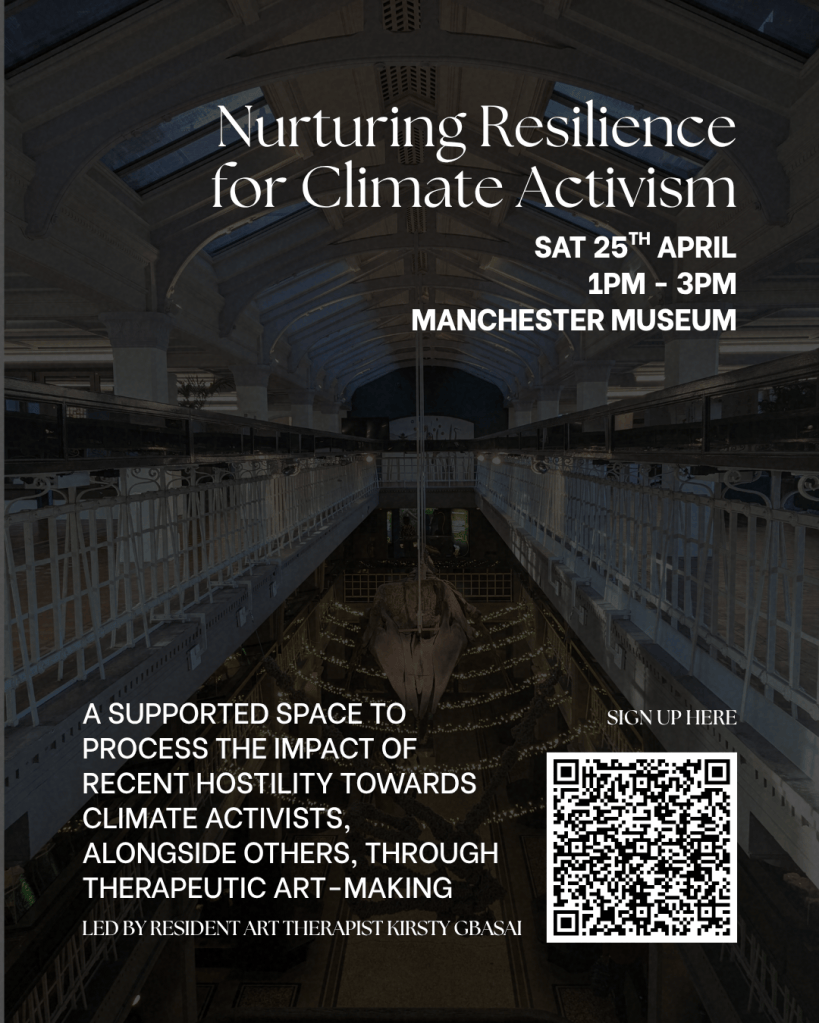
Holding Space was also commissioned by Manchester Museum to deliver Nurturing Resilience for Climate Activism – a supportive therapeutic space in which people could process the emotional impact of increasing hostility towards climate activists and consider how to sustain themselves in their activism.
Developing an offer together
I work collaboratively with each organisation to understand who the work is for, what support is needed and how it can be made accessible.
We can discuss the intended purpose, setting, number of participants, session format, safeguarding requirements and materials before I develop a proposal.
 Holding Space | Art Therapy